
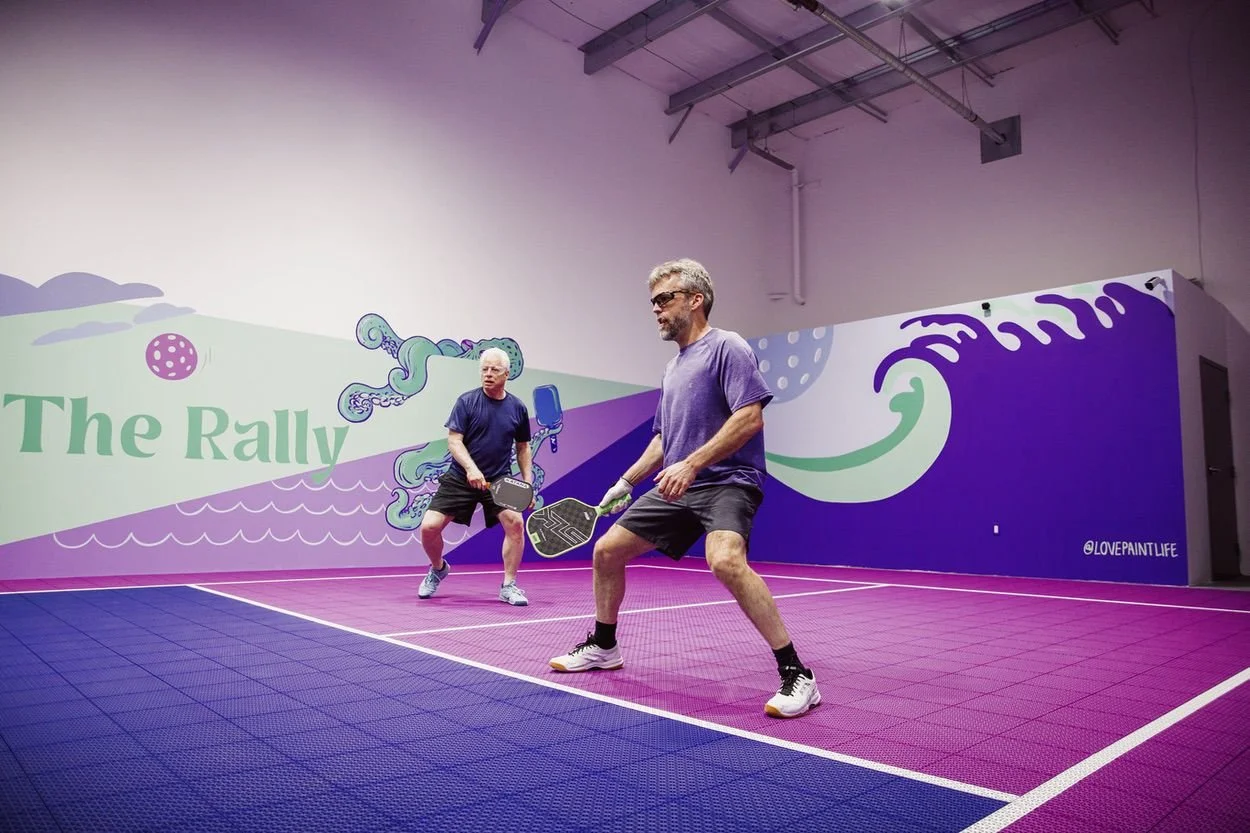
Pickleball is the fastest-growing sport in North America, combining elements of tennis, badminton and ping-pong. It's easy to learn, genuinely fun, and suits all ages and skill levels. Here's your step-by-step guide to getting started.
What you'll need
- A pickleball paddle — lighter than a tennis racket
- A pickleball — a plastic ball with holes, similar to a wiffle ball
- Court shoes with good grip
- Comfortable athletic clothing
1. Understand the court layout
A pickleball court is 20 feet wide by 44 feet long — roughly a badminton court. The net is 36 inches high at the ends and 34 in the centre. Most importantly, note the kitchen, or non-volley zone: a seven-foot area either side of the net where you cannot hit the ball out of the air.
2. Learn the basic serving rules
Every point starts with an underhand serve. Stand behind the baseline and serve diagonally into your opponent's service area. Your paddle must contact the ball below waist level, and both feet stay behind the baseline until after contact.
3. Master the double-bounce rule
This is pickleball's most distinctive rule. After the serve, the receiving team must let the ball bounce once before returning it. Then the serving team must also let that return bounce once. After those two bounces, either team can volley or play off the bounce.
4. Respect the non-volley zone
Never step into the kitchen to hit a ball out of the air. You can enter to play a ball that has bounced, but you must exit before hitting any volleys. The rule prevents aggressive net play and keeps rallies longer and more strategic.
5. Learn proper scoring
Only the serving team can score, and games are usually played to 11, win by two. When calling the score in doubles, announce three numbers: your team's score, your opponents' score, and whether you are server one or two.
6. Practise the essential shots
- Serve — underhand, diagonal, deep into the service area
- Return of serve — hit deep to buy time to move forward
- Dink — a soft shot that lands in the opponent's kitchen
- Drive — a harder, faster shot hit at shoulder height or below
- Lob — a high, arcing shot over opponents parked at the net
7. Develop strategic positioning
In doubles, move as a team. Both partners should generally be at the same depth — either both at the baseline or both at the kitchen line. The kitchen line is the preferred position for most rallies.
8. Favour consistency over power
Pickleball rewards patience. Aim to keep the ball in play rather than hitting winners. Most points are won because the other team made a mistake, not because someone hit something spectacular.
9. Practise your footwork
Stay on the balls of your feet, take small adjusting steps, and try to hit the ball in front of your body. Move forward and backward as a unit with your partner.
10. Learn basic court etiquette
Call the score clearly before serving, call out balls honestly on your own side, and if you're genuinely unsure whether a ball was in or out, give your opponent the benefit of the doubt.
11. Start with recreational play
Begin with casual games among friends or a beginner-friendly group. Focus on having fun and getting comfortable with the rules and shots before worrying about advanced strategy.
12. Be patient with yourself
Like any sport, pickleball improves with practice. Start with shorter games and build endurance. A private court is a good place to be new — nobody is waiting on you, and nobody is watching.